
Best Weighted Blankets for Sleep (Comfort, Safety & Sleep Quality)
Weighted blankets are widely used by people who struggle with restless sleep, nighttime anxiety, or frequent awakenings. Unlike supplements, they work through physical pressure, not chemistry, which makes them appealing to those who prefer non-ingestible sleep solutions.
This guide explains how weighted blankets support sleep quality, how to choose the right one, and which features matter most when buying.
This page is informational and not medical advice. Supplements are not a substitute for professional care.
How Weighted Blankets Support Better Sleep
Weighted blankets apply gentle, evenly distributed pressure across the body. This pressure is commonly referred to as deep pressure stimulation, a technique associated with relaxation and nervous system regulation.
Research and user reports suggest weighted blankets may help by:
Promoting relaxation before sleep
Reducing nighttime movement
Supporting calmer sleep onset
Improving perceived sleep quality in some individuals
They do not sedate or “force” sleep. Instead, they may help the body settle into rest more naturally.
Who May Benefit Most From a Weighted Blanket
Weighted blankets are often used by people who experience:
Restless or light sleep
Stress-related sleep disruption
Difficulty staying asleep
Sensory sensitivity during sleep
They are also commonly explored by individuals who want to improve sleep comfort without supplements or medications.
How We Evaluated Weighted Blankets
To keep this guide practical and unbiased, we focused on blankets that meet the following criteria:
Even weight distribution
Breathable materials
Appropriate weight options
Durable stitching and construction
Clear care and safety instructions
Not all weighted blankets are suitable for everyone. Weight, material, and size matter.
Choosing the Right Weight (Most Important Factor)
A commonly used guideline is:
Choose a blanket that is around 8–12% of your body weight
Examples:
60–70 kg (130–155 lb): ~6–8 kg (13–18 lb)
70–90 kg (155–200 lb): ~8–10 kg (18–22 lb)
Heavier is not always better. A blanket that is too heavy may feel restrictive rather than calming.
1. Glass Bead Weighted Blankets
Best for: Even pressure and temperature control
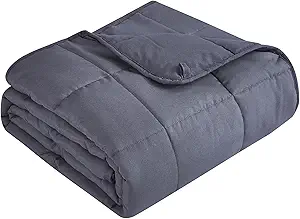
Glass bead blankets are among the most popular options. They use small, smooth beads sewn into pockets to distribute weight evenly.
Why they’re commonly chosen:
Quiet (less shifting noise)
Balanced weight distribution
Often thinner than plastic-filled options
Considerations:
Stitching quality matters
Pocket design affects comfort
These are widely available on Amazon in multiple weight and size options.
2. Cotton Weighted Blankets
Best for: Breathability and all-season use
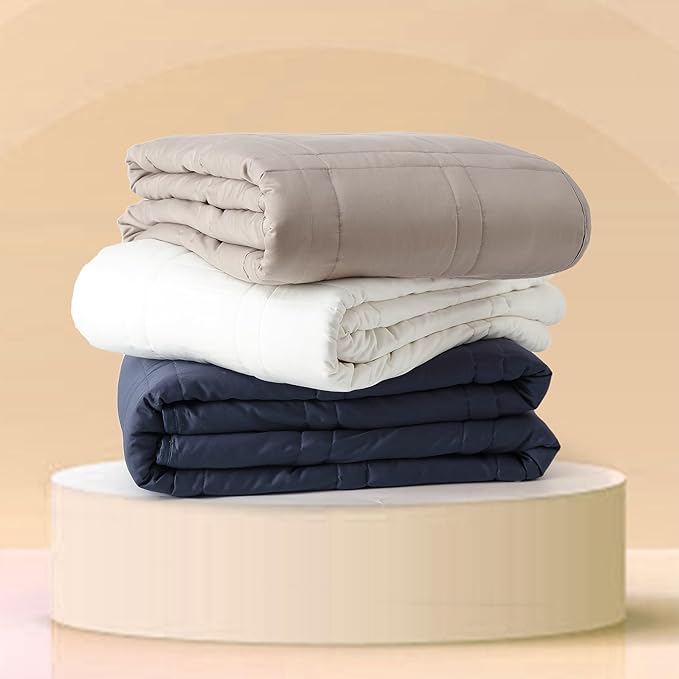
Cotton covers are often preferred by people who sleep warm or want a more natural feel.
Advantages:
Breathable and moisture-absorbing
Suitable for year-round use
Easier to clean than plush fabrics
Good choice if:
You tend to overheat at night
You prefer a lighter fabric texture
3. Cooling Weighted Blankets
Best for: Hot sleepers
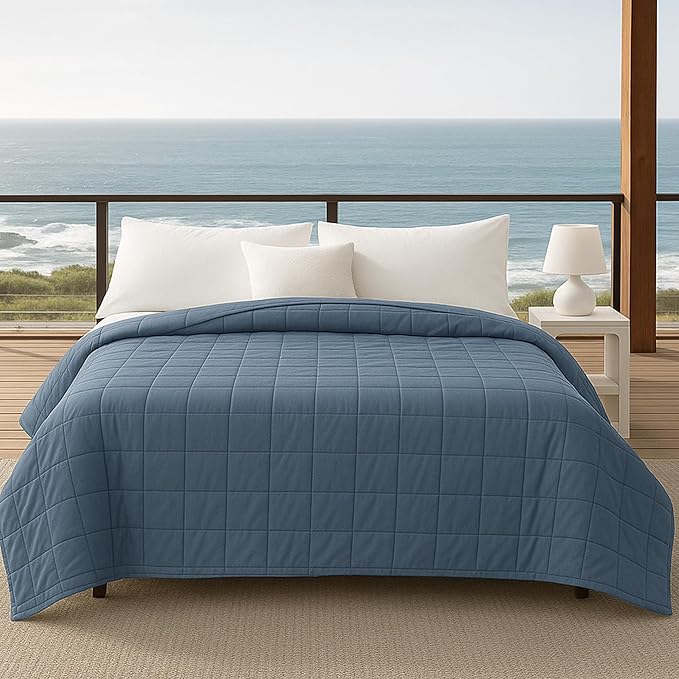
Some weighted blankets are designed specifically for temperature regulation. These often use cooling fabrics or moisture-wicking materials.
Features to look for:
Cooling bamboo or eucalyptus-based fabrics
Breathable inner layers
Thin profile despite weight
These options are often slightly more expensive but can significantly improve comfort for warm sleepers.
4. Knitted Weighted Blankets (Bead-Free)
Best for: Texture sensitivity and quieter sleep
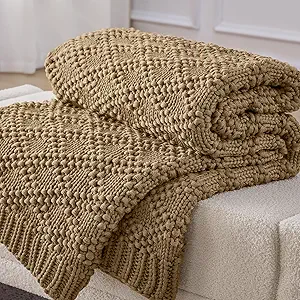
Knitted weighted blankets use dense yarn instead of beads to create weight.
Why people choose them:
No beads or pocket stitching
Quiet movement
Even airflow through the knit
Trade-offs:
Often bulkier
Usually higher price point
These are suitable for people who dislike the feel or sound of bead-filled blankets.
Safety Considerations
Weighted blankets are generally safe for adult use when chosen correctly. However, they may not be appropriate for everyone.
Avoid or use caution if:
You have respiratory or circulation conditions
You experience mobility limitations
The blanket restricts movement or breathing
Weighted blankets are not recommended for infants or small children without professional guidance.
How to Use a Weighted Blanket for Best Results
Use it on top of a regular blanket or sheet
Allow a few nights for adjustment
Start with shorter use if new to weighted blankets
Avoid stacking multiple heavy blankets
Comfort improves when the blanket feels secure, not restrictive.
Weighted Blanket vs Other Sleep Tools
Weighted blankets are often combined with other sleep-support tools, such as:
Magnesium supplements
Sleep-friendly lighting
Cooling mattresses or pillows
They work best as part of a broader sleep optimization routine, not as a standalone fix.
Frequently Asked Questions
Do weighted blankets actually improve deep sleep?
Some people report deeper, more continuous sleep. Results vary depending on individual sensitivity and comfort preferences.
Can I use a weighted blanket every night?
Yes, many people use them nightly. Comfort should always be the deciding factor.
Are heavier blankets better?
No. Proper weight selection is more important than maximum weight.
Do they help with anxiety at night?
Some users report a calming effect, particularly during sleep onset.
Final Thoughts
Weighted blankets are a non-invasive sleep tool that may help improve sleep comfort and perceived quality for some individuals. Choosing the right weight, material, and construction makes a significant difference.
If you’re exploring options, focus on:
Proper weight range
Breathable materials
Even weight distribution
Clear care instructions